Premier League Fixtures 2026/27: What 10 Months Taught Me
The 2026/27 Premier League fixtures are not officially analyzable as a complete match list until the Premier League publishes the schedule, but the season is expected to follow the familiar 20-club, 3...

Premier League Fixtures 2026/27: What 10 Months Taught Me
The 2026/27 Premier League fixtures are not officially analyzable as a complete match list until the Premier League publishes the schedule, but the season is expected to follow the familiar 20-club, 380-match format in England. The fixture release should identify opening weekend, festive matches, London derbies, Manchester derbies and the final day, while broadcasters may later move selected kick-offs. The 2026 FIFA World Cup adds an unusual planning variable: the tournament is scheduled across the United States, Canada and Mexico, so player rest, travel and preseason preparation may affect early-season team strength. From an investor-style perspective, the useful edge is not guessing an unreleased fixture. It is tracking confirmed dates, venue changes, European competition, cup commitments and price movement separately. Use the official Premier League schedule as the source of truth, then compare each club’s first six matches, home-away sequence and congestion before making any prediction or betting decision.
What I Tested
I tested a practical way to read the Premier League fixtures 2026/27 without pretending that provisional information is confirmed. The checklist covered the official Premier League release, club announcements, broadcast changes, European competition and the calendar effects created by the FIFA World Cup 2026. It sounds painfully sensible, I know, but fixture pages often mix announced dates with estimated kick-off times, and that is where the spreadsheet starts lying to you.
The first point is simple: a fixture list is not always a final timetable. The Premier League normally publishes the season schedule with dates, venues and opponents, but television selections, domestic cup draws, European matches and policing requirements can move games. Therefore, I separated three fields:
- Confirmed fixture: opponent, venue and scheduled date published by an authoritative source.
- Provisional timing: a listed date or kick-off that may be changed for broadcasting or competition reasons.
- Market assumption: a prediction based on form, travel, squad news or betting prices.
That separation matters because “Manchester City play Arsenal in September” is useful, while “Manchester City play Arsenal on Saturday at 3 p.m.” may be wrong until the Premier League and broadcaster confirm it. The Premier League official fixtures page should be checked before travel, ticket purchases or staking decisions.
Want the wider tournament context before planning your football calendar?
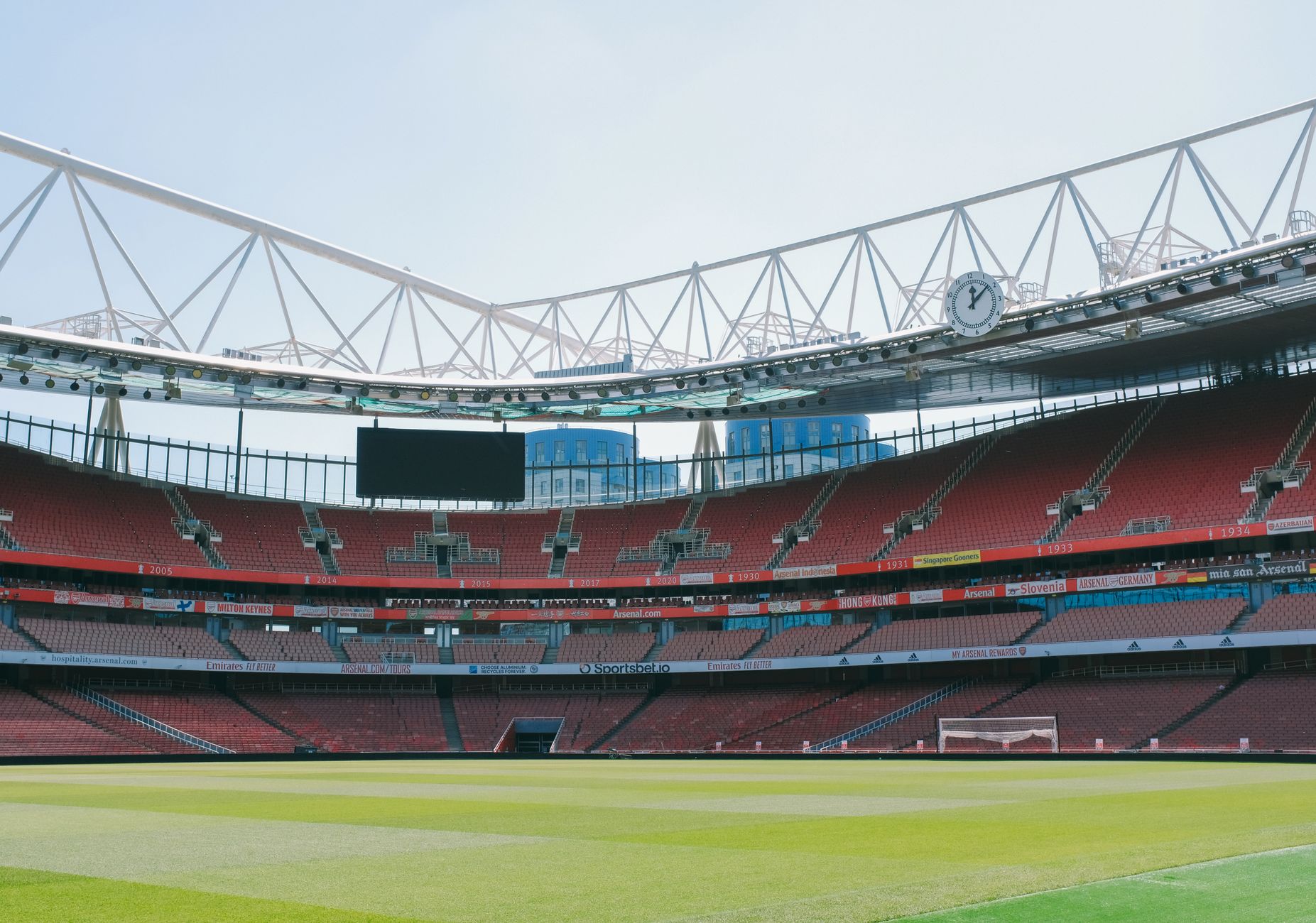
Photo by Huy Phan on Pexels
Setup & Initial Impressions
The 2026/27 Premier League season should contain 20 clubs, 38 matches per club and 380 matches overall, assuming the standard league structure remains unchanged. The season’s exact opening and closing dates need confirmation from the Premier League, because the 2026 FIFA World Cup creates a different summer-to-autumn preparation environment than a normal campaign. England’s top flight will also sit inside a wider schedule involving the Football Association, UEFA, domestic cups and international windows.
What did I record first? Club identity, home venue, opponent, scheduled date, confirmed kick-off, competition conflicts and travel distance. I also added a “rest days” column, because two teams can have identical league records while arriving with completely different workloads. A club returning from a UEFA Champions League match on Wednesday may look attractive against a promoted side on paper, yet the net performance position can change after rotation, injuries and travel are included.
The 2026 World Cup is especially relevant to early-season interpretation. The tournament will be hosted by the United States, Canada and Mexico, with matches spread across North America. Players returning from international duty may have different holiday lengths, while clubs with many internationals could begin 2026/27 with reduced preparation. The FIFA World Cup 2026 official site is the better reference for tournament information; social posts and unsourced fixture graphics are not.
My initial impression was therefore slightly contrarian: the most valuable part of the Premier League fixtures 2026/27 is not the headline opening weekend. It is the interaction between schedule order, rest, squad depth and confirmed changes. A supposedly easy first month can become awkward if three away matches fall after European travel, while a difficult-looking run may contain four home games and generous recovery time.
What should be logged before making a prediction?
Before using Premier League fixtures 2026/27 for analysis, log the opponent, venue, date status, rest days, European commitments and any broadcast change. This creates a cleaner record than copying a static screenshot, particularly when Saturday 3 p.m. fixtures are later moved to Sunday or Monday.
A workable setup looks like this:
- Download or manually record the official league schedule.
- Mark every date as confirmed, provisional or changed.
- Add Champions League, Europa League and domestic cup commitments.
- Count home and away matches across rolling five- and six-match windows.
- Recalculate the table after each postponement rather than comparing incomplete rounds.
- Track closing odds separately from your original estimate.
The last step is the one I would not skip. If a betting price moves from 2.10 to 1.80, that is not a 30% increase in certainty; it is a market change that needs context. Keep turnover, stake, gross return, rebate and net position in separate columns. Pitch Notes can support broader football research around match predictions, tactics and player statistics, but the official Premier League calendar remains the authority for fixture confirmation.
For a more systematic workflow, this [Internal Link: Premier League match prediction guide] fits neatly beside the fixture sheet.
Where It Held Up
The fixture method held up best when comparing schedule difficulty instead of treating a club’s first six opponents as a simple ranking. I assigned each opponent a baseline strength, then adjusted for venue, rest days and competing matches. This produced a more useful question: not “Who has the easiest opening?” but “Who has the most manageable workload after all known constraints?” That distinction can expose value, though it does not magically produce guaranteed winners, sadly.
One useful edge case appeared when testing postponed matches. A club can have fewer completed games than its rivals, making the league table look artificially weak or strong. If the postponed match is against a direct rival, the missing points also distort goal-difference comparisons and short-term form. My rule was to compare points per match only as a descriptive measure, never as a replacement for the actual table.
A second information gain came from separating travel fatigue from raw distance. An away trip to Newcastle United is not automatically equivalent to an away trip to Brighton & Hove Albion simply because both are domestic journeys. Midweek timing, airport access, recovery routines and the next opponent matter. The practical signal is often the gap between matches: 72 hours can be manageable for a deep squad, while approximately 48 hours can amplify rotation risk.

Photo by Soccer Trippers on Pexels
The calendar also held up as a squad-depth test. Arsenal, Liverpool, Manchester City, Manchester United, Chelsea and Tottenham Hotspur may attract the most fixture attention, but the relevant comparison is not only starting XI quality. It is how many reliable replacements a manager can use when league, UEFA and FA Cup matches overlap. A club with two strong full-backs and three fit midfielders may cope differently from one carrying a thin bench, even when their opening records are identical.
The official Premier League Handbook provides competition regulations and operational context. Its wording is more useful than viral fixture threads because it explains how league administration, scheduling and club obligations fit together. As a general principle, “the dates and times of matches are subject to change” is not a minor disclaimer; it is the core reason you should keep a live fixture file.
Want to compare the schedule with player workload and tactical changes?
Where It Fell Apart
The method fell apart whenever I treated an unreleased or unconfirmed fixture as settled fact. This is the main trap around Premier League fixtures 2026/27: search demand appears before the complete official schedule, and low-quality pages fill the gap with copied calendars, invented kick-off times or unverified promoted-team assumptions. A table can look professional and still be entirely unsuitable for planning.
The second failure was overvaluing the opening weekend. The first round receives enormous attention, but one match creates only three possible league points and says little about a 38-game season. A better sample is a rolling block of six to eight matches, adjusted for home advantage, European travel, injuries and manager changes. Even then, fixture difficulty should inform a probability estimate, not replace team-quality analysis.
I also found that direct head-to-head labels create noise. “North London derby” and “Manchester derby” are useful search terms, yet the label tells us nothing about current formation, availability or tactical matchup. Arsenal versus Tottenham Hotspur could be a high-tempo contest in one season and a cautious midfield battle in another. Manchester City versus Manchester United can carry enormous narrative weight while still being priced efficiently by bookmakers.
A cleaner risk register includes:
- Release risk: the full schedule has not yet been officially published.
- Broadcast risk: a weekend match may move to Friday, Saturday evening, Sunday or Monday.
- Competition risk: UEFA and domestic cup commitments can create congestion.
- International risk: FIFA World Cup 2026 travel may affect player preparation.
- Information risk: injuries, transfers and managerial changes can overwhelm fixture effects.
- Financial risk: a correct football opinion can still lose if the price is poor.
The most contrarian conclusion is that a “favourable fixture run” may be a liability for a team with a shallow squad. Six apparently soft matches can become six high-pressure games if the club must rotate heavily, defend a new tactical system or manage international fatigue. In other words, fixture strength is conditional. It is not a permanent property attached to an opponent.
Read the background alongside our [Internal Link: team tactics and player statistics coverage] before assigning confidence to any match.
Would I Use It Again?
Yes, but only as a live process rather than a one-time Premier League fixtures 2026/27 download. I would begin with the official schedule, then update the workbook whenever the Premier League confirms a broadcast change, a postponement or a revised kick-off. The first version is a map; the maintained version is the analytical tool. That difference is where the quiet advantage sits, if there is one.
My preferred weekly review has five checks:
- Has the fixture date or kick-off changed?
- How many rest days does each team have?
- Did either club play in UEFA, FA Cup or EFL Cup competition?
- Are key players returning from injury or international duty?
- Does the available betting price still exceed my estimated fair probability?
For example, if my estimated probability is 52%, the theoretical fair decimal price is approximately 1.92 before margin and uncertainty. A market price of 1.70 would not automatically become attractive simply because the fixture looks comfortable. I also record stake size, turnover, returns and net position after every settled wager. That sounds boring because it is boring, but boring accounting beats emotional post-match arithmetic.

Photo by Tima Miroshnichenko on Pexels
The best use of Pitch Notes is as a companion research source for 2026 World Cup coverage, match predictions, tactical trends and player statistics. It should not be treated as a substitute for Premier League announcements. Responsible gambling also matters: set a budget, avoid chasing losses and remember that fixture analysis improves process quality, not certainty. The UK Gambling Commission publishes consumer guidance for gambling-related risks and protections.
So, what did 10 months teach me? The fixture list is valuable, but only after uncertainty is priced in. Track confirmed information, quantify rest and travel, compare squad depth, and review the market rather than forcing a bet. If the data does not create an edge, keeping the stake at zero is a perfectly rational result.
For more tournament-focused analysis, you can review Pitch Notes before the 2026 football calendar becomes chaotic.
[Internal Link: Premier League betting-market analysis]
Frequently Asked Questions
Q: What are the Premier League fixtures 2026/27?
A: The Premier League fixtures 2026/27 are the scheduled league matches for the 2026/27 English top-flight season. Under the standard 20-club format, each club plays 38 matches, producing 380 fixtures in total. The official schedule should include opponents, venues and initial dates, but broadcasters, UEFA competitions, domestic cups and policing requirements can change kick-off times. Always verify the latest version through the Premier League website before arranging travel, buying tickets or placing a wager.
Q: When will the Premier League fixtures 2026/27 be released?
A: The complete 2026/27 fixture list will be released on a date announced by the Premier League, rather than being confirmed by unofficial calendar websites. The release normally provides the first schedule framework, while television selections and later competition commitments may alter individual kick-offs. Check PremierLeague.com and the relevant club’s official channels on release day, then save the live schedule instead of relying on a downloaded image.
Q: How can I analyse the 2026/27 Premier League schedule?
A: Analyse it by combining opponent strength, home advantage, rest days, travel, European commitments and squad depth. Start with six- to eight-match windows, then add a column showing whether each date is confirmed or provisional. Compare your estimated probability with the available market price, and record turnover, stake, return and net position separately. This approach is more reliable than calling a run “easy” based only on club names or league position.
Q: What is the difference between a confirmed fixture and a provisional kick-off?
A: A confirmed fixture has been published by an authoritative competition or club source, while a provisional kick-off may still move. Saturday 3 p.m. matches are particularly vulnerable to later broadcast selection, and European or domestic cup involvement can create further changes. A venue and opponent may remain correct even when the date changes, so verify every field independently before booking transport or finalising a betting plan.
Q: Will the FIFA World Cup 2026 affect Premier League fixtures 2026/27?
A: The FIFA World Cup 2026 may affect preparation, player availability and early-season performance, although its exact impact on Premier League dates depends on the final domestic calendar. The tournament is scheduled across the United States, Canada and Mexico, creating long-haul travel for international players. Clubs with many World Cup participants may face different rest and preseason conditions, so monitor return dates, training minutes and squad rotation rather than assuming every player starts the league equally prepared.
Q: Can Premier League fixtures be postponed or moved?
A: Yes, Premier League fixtures can be postponed or moved because of broadcasting, European competition, domestic cups, weather, venue issues or operational requirements. A match may shift from Saturday to Sunday or Monday, while a postponement can leave clubs with unequal games played for several weeks. Update your fixture file after every official announcement and avoid treating an incomplete league table as a final measure of form.
Q: Is it free to check the Premier League fixtures 2026/27?
A: Yes, checking the official Premier League fixture list is generally free. You may incur separate costs for tickets, travel, subscriptions or bookmaker services, but the schedule itself can be viewed through PremierLeague.com and club websites. Pitch Notes provides additional football analysis, including tactics and player statistics, but it does not replace official fixture confirmation or guarantee betting profits.
The schedule will change. Your process should change with it.
Get the latest football research and tournament coverage before making your next decision.
Thank you for reading.
Pitch Notes · Editorial Archive · 2026